Split your purchase into 3 payments with Klarna
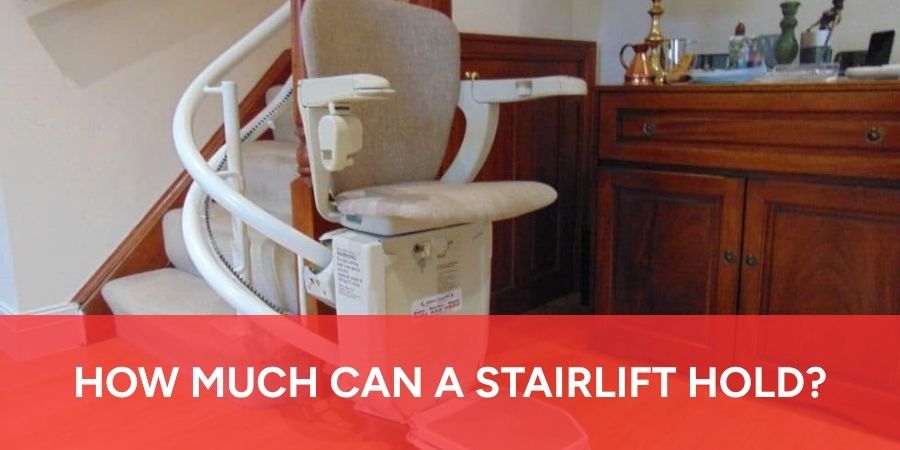
One of the most important questions people ask when considering a stairlift is how much weight it can safely carry. This is not simply a matter of comfort. Weight capacity directly affects safety, reliability, and long-term performance.
Manufacturers design stairlifts with specific limits based on motor strength, rail design, and structural safety standards. Exceeding these limits can lead to mechanical strain, breakdowns, or unsafe operation. Understanding what those limits are, and how they apply to different stairlift types, helps you make the right decision for your home.
This guide explains typical weight capacities, what affects them, and how to choose a stairlift that will remain dependable over time.
Most standard stairlifts are designed to carry between 18 and 25 stone, which is approximately 115 to 160 kilograms. This range covers the majority of users comfortably and safely.
However, weight capacity is not the same across all models. It varies depending on the design, the rail system, and whether the lift is straight or curved.
| Stairlift Type | Typical Weight Capacity |
|---|---|
| Standard straight stairlift | 18 to 25 stone (115 to 160 kg) |
| Curved stairlift | 18 to 22 stone (115 to 140 kg) |
| Heavy-duty stairlift | 25 to 30+ stone (160 to 190+ kg) |
| Reconditioned stairlift | Varies depending on model |
These figures provide a general guide, but each manufacturer sets precise limits for their equipment. It is always important to check the specification of the exact model being considered.
Weight capacity is not simply about whether the stairlift will move. It plays a central role in how smoothly and safely the lift operates.
When a stairlift is used within its recommended limit, the motor runs efficiently, the rail experiences less stress, and the batteries maintain a consistent charge cycle. This leads to quieter operation and fewer maintenance issues.
Operating close to or above the maximum capacity places extra strain on every component. Over time, this can lead to reduced performance, increased wear, and more frequent servicing.
For households where the stairlift will be used multiple times per day, selecting a model with a comfortable margin above the user’s weight is often the best approach.
The motor is the core of the stairlift. Stronger motors are designed to handle greater loads without overheating or slowing down. Heavy-duty models use more powerful drive systems to maintain smooth travel even under higher weight.
A standard motor is sufficient for most users, but higher capacity lifts include reinforced gearing and improved torque control.
The rail is not just a track. It supports the entire load of the user and the stairlift itself. Straight rails are generally more robust because they follow a simple path, while curved rails require more complex engineering.
This is one reason curved stairlifts often have slightly lower weight limits compared to straight models.
Homes with wider staircases may allow for stronger, more supportive rail installations, which can increase overall capacity.
The physical design of the chair also plays a role. Wider seats and reinforced frames are used in heavy-duty stairlifts to accommodate higher weight safely.
Standard seats are designed for compactness, especially in narrow staircases, which can limit the maximum supported load.
Heavier loads require more power to move the stairlift along the rail. This places additional demand on the batteries and charging system.
High-capacity models are equipped with stronger batteries and charging units to maintain consistent performance without rapid power loss.
If the user is close to or above the standard weight limit, selecting the correct stairlift becomes even more important. There are models specifically designed for higher capacities, often referred to as heavy-duty or bariatric stairlifts.
These lifts are built with reinforced components and wider seating to provide both safety and comfort.
When exploring options, it is worth considering straight stairlift models if the staircase layout allows. These often provide higher weight limits due to their simpler rail design.
For more complex staircases, curved stairlift systems can still be adapted to support higher weights, although the available range may be slightly more limited.
Reconditioned stairlifts can be an excellent option for reducing costs, but weight capacity depends entirely on the original model and how it has been refurbished.
A properly reconditioned unit should meet the same specifications as when it was new. This includes weight limits, provided all key components have been inspected and replaced where necessary.
It is important to choose a supplier that fits new batteries and thoroughly tests the system. Reviewing available reconditioned stairlift options can help identify models that suit both budget and capacity requirements.
A stairlift that is operating beyond its comfortable range will often show early warning signs. Recognising these can prevent more serious issues from developing.
If any of these symptoms appear, it is important to stop using the stairlift and arrange an inspection. Continuing to use an overloaded lift can lead to damage or safety risks.
Even the strongest stairlift will not perform properly if it is not installed correctly. Professional installation ensures the rail is securely fixed, aligned properly, and capable of supporting the intended load.
Installers will assess the staircase structure, including wall strength and step condition, before fitting the system. This assessment is particularly important for higher capacity stairlifts.
In some cases, minor adjustments to the staircase or rail positioning can improve weight distribution and overall performance.
Stairlifts in the UK are built to strict safety standards. Manufacturers test their products under controlled conditions to confirm they can safely carry their stated maximum weight.
These tests include repeated usage cycles, load testing, and emergency stop functionality. This provides reassurance that the lift will perform reliably when used within its specified range.
Using a stairlift within its recommended capacity is essential to maintain these safety standards over time.
When choosing a stairlift, it is sensible to think beyond current needs. Weight can change over time, and mobility requirements may also evolve.
Selecting a model with a higher capacity than currently required can provide greater flexibility and reduce the need for future upgrades.
This is particularly relevant in households where more than one person may use the stairlift.
Comfort should also be considered. A stairlift that operates well within its capacity tends to feel smoother, quieter, and more stable.
Higher weight capacity often comes with larger seats and reinforced frames. While this improves comfort and support, it can also require more space on the staircase.
For narrower staircases, careful planning is needed to balance capacity with practicality. Folding seats, armrests, and footrests can help maintain access when the lift is not in use.
Professional advice is valuable in these situations, as it helps identify a solution that meets both structural and personal requirements.
Regular maintenance becomes even more important for stairlifts operating at higher capacities. Components experience greater load, which can lead to faster wear if not properly managed.
Servicing typically includes checking the motor, inspecting the rail, testing safety features, and assessing battery performance.
Keeping the stairlift well maintained supports consistent operation and extends its working life.
Understanding how much weight a stairlift can hold is essential when choosing the right model for your home. Standard stairlifts cover a wide range of users, but higher capacity options are available where needed.
The key is to select a stairlift that not only meets current requirements but also provides reliable performance over time. Factors such as motor strength, rail design, and installation quality all play a role in achieving this.
Taking a careful and informed approach allows you to choose a stairlift that offers both safety and confidence with every use.